
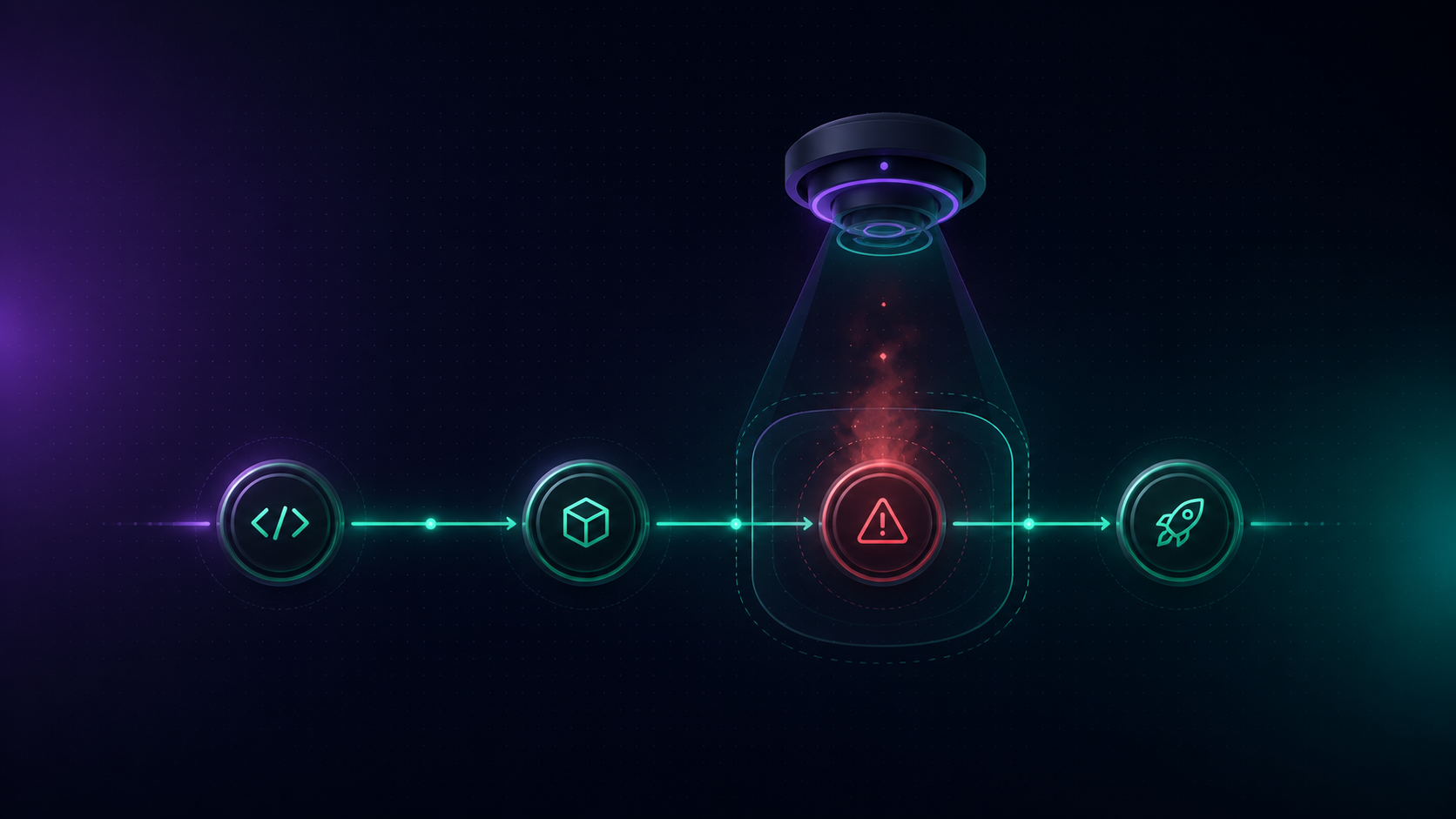
Build failures and deployment issues become expensive when teams discover them too late. By automating deployment alerts, GitHub Actions notifications, and production updates, engineering teams can detect problems instantly, respond faster, and keep software delivery moving without constant manual monitoring.
1. Why Build Failures Go Unnoticed
2. Common Deployment Monitoring Challenges
3. How to Detect Failed Deployments Earlier
4. How to Improve Incident Visibility
5. Best Practices for CI/CD Notifications
6. How to Monitor Production Deployments
7. How to Alert the Right Team Automatically
Most CI/CD pipelines already contain the information teams need. Build statuses, workflow logs, deployment results, and GitHub Actions all capture what happened and when it happened. But unless someone is actively monitoring those tools, critical updates remain buried where only a few people ever see them.
At first, the impact seems minor. An engineer checks the pipeline manually, a DevOps lead verifies the latest deployment, or a teammate asks whether the build completed successfully. Across multiple builds every day, however, these small delays reduce visibility, slow incident response, and make software delivery less predictable.
Build failures don't go unnoticed because teams lack information. They go unnoticed because the right information doesn't reach the right people at the right time.
As CI/CD pipelines become more sophisticated, keeping track of every build, deployment, and release becomes increasingly difficult. The challenge isn't a lack of deployment data, it's knowing which events require immediate attention and making sure the right people see them.
Some of the most common deployment monitoring challenges include:
Each of these challenges creates a visibility gap within the CI/CD pipeline. Closing that gap starts with ensuring critical deployment events are surfaced automatically instead of relying on manual monitoring.
The difference between a minor deployment issue and a major release delay often comes down to how quickly the team becomes aware of it. Detecting failed deployments earlier means receiving immediate visibility into every critical event, rather than discovering problems hours later.
When a build fails, the engineering team should be notified immediately with details such as the repository, workflow status, and build logs. Early alerts allow developers to investigate and resolve issues before they impact the next deployment.
GitHub Actions workflows provide valuable insight into every stage of the CI/CD pipeline. Automated notifications for workflow failures, cancelled jobs, or completed runs ensure teams always know the current deployment status without checking the pipeline manually.
Whether a deployment succeeds or fails, timely alerts keep developers, DevOps teams, and QA informed in real time. This reduces delays, improves release monitoring, and helps teams take corrective action as soon as an issue occurs.
Once a deployment reaches production, automated notifications confirm that the release is live or immediately highlight any issues that require attention. This gives engineering teams complete visibility into every stage of the software delivery process.
Detecting a failed deployment is only the first step. What happens next determines how quickly your team can resolve the issue and restore normal operations. Without clear incident visibility, valuable time is often lost identifying the problem, finding the right people, and coordinating a response.
Effective incident visibility includes:
Notify engineering teams the moment a deployment impacts production. Immediate visibility helps teams investigate issues before they affect users or disrupt software delivery.
Not every deployment issue has the same impact. Critical production failures should automatically notify on-call engineers or key stakeholders, ensuring urgent incidents receive immediate attention.
Keep developers, DevOps, QA, and operations teams informed through real-time notifications. When everyone has access to the same deployment information, teams can collaborate faster and resolve incidents more efficiently.
Improving incident visibility isn't about sending more notifications. It's about ensuring every critical deployment event reaches the right people at the right time, enabling faster decisions and more reliable software delivery.
Effective CI/CD notifications aren't about sending an alert for every pipeline event. They're about delivering meaningful updates that help teams respond faster without creating unnecessary noise. With Flomation, you can build notification workflows that keep engineering teams informed while maintaining complete visibility across your CI/CD pipeline.
Configure notifications for build failures, deployment failures, production releases, and workflow errors that require immediate attention. This helps teams focus on the events that matter most.
Different teams need different information. Use Flomation to route build notifications to developers, production updates to QA, and release notifications to operations or product teams.
Every notification should include essential details such as the repository, deployment environment, workflow status, and a link to the relevant logs. Clear context enables faster investigation and resolution.
For high-priority deployment failures, configure Flomation to automatically notify on-call engineers or key stakeholders, ensuring critical incidents are addressed without delay.
As your CI/CD processes evolve, regularly review your Flomation workflows to eliminate unnecessary alerts and ensure your team continues receiving timely, relevant deployment notifications.
Production deployments always require complete visibility. Knowing when a release reaches production, fails unexpectedly, or requires immediate attention helps teams respond quickly and deliver software with confidence. Instead of relying on manual checks, production monitoring should happen automatically.
With Flomation, you can connect your CI/CD tools and automate production deployment notifications in just a few steps:
A deployment alert is only valuable if it reaches the people who can act on it. Sending every notification to every team quickly leads to alert fatigue, while sending it to too few people can delay incident response. The goal is to ensure every deployment event reaches the right audience automatically.
We help you create intelligent notification workflows based on the type and severity of each event.
· Notify developers when build failures or GitHub Actions workflows require immediate attention.
· Alert QA teams when deployments reach staging or production so testing can begin without waiting for manual updates.
· Keep product and operations teams informed whenever a new release goes live or a deployment is delayed.
Trigger escalation workflows for critical production failures, automatically notifying on-call engineers or key stakeholders to accelerate incident response.
By routing deployment alerts to the right teams at the right time, we help improve incident awareness, reduce response times, and maintain complete visibility across every stage of your software delivery lifecycle.
Set up your first CI/CD workflow with Flomation and start receiving deployment alerts in real time.